


New Mexico’s capital city boasts several ‘oldest’ distinctions and a vibrant arts scene
The Arizona Republic — Sept. 1, 2026
SANTA FE, N.M. — The superlative “oldest” is seemingly as pervasive in the high-altitude New Mexico city of Santa Fe as earth-colored adobe buildings, upscale art galleries and Hatch green chilis.
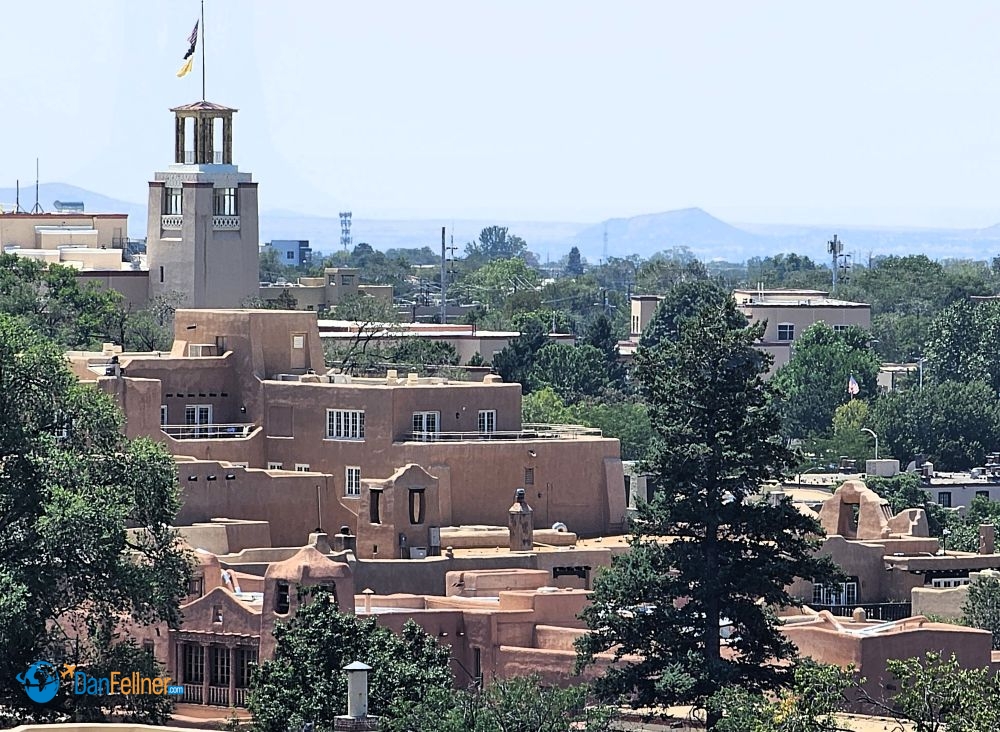
The view of downtown Santa Fe, New Mexico, the oldest capital city in the United States.
Nestled in the foothills of the Sangre de Cristo Mountains at an elevation of 7,000 feet, Santa Fe is America’s oldest state capital and the oldest European settlement west of the Mississippi River. It’s home to the country’s oldest public building, the oldest church, the oldest house (arguably) and even the oldest public celebration — the Santa Fe Fiesta.
But Santa Fe isn’t just for history-lovers. The city of 90,000 residents also offers a vibrant arts scene with one of the most unique opera venues in the world, not to mention the creature-comforts found in posh boutique hotels, spas and some 400 eclectic restaurants.
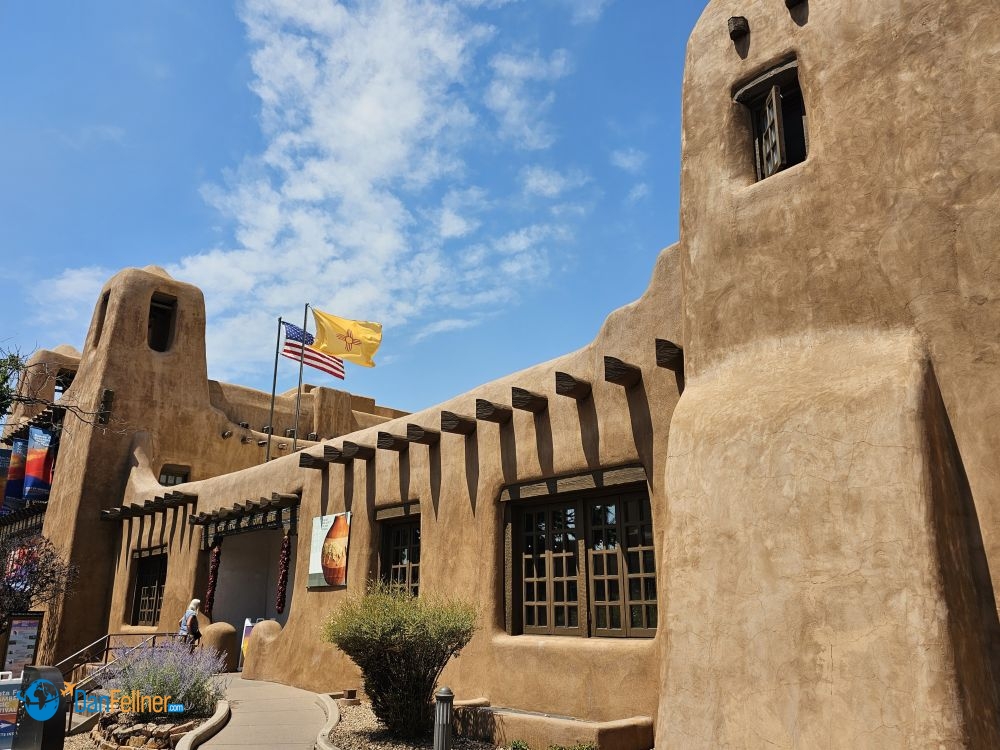
Pueblo Revival architecture, as seen at the New Mexico Museum of Art, is commonplace in Santa Fe’s historic downtown.
Throw in a unique blend of Native, Spanish and Anglo cultures and a summer climate that’s normally about 20 degrees cooler than Phoenix, and it’s easy to see why the readers of Travel + Leisure magazine have voted Santa Fe the number one city in the U.S. for the past two years.
Indigenous peoples first began settling in the area nearly a thousand years ago. The Spanish arrived half-a-millennium later and established Santa Fe as a seat of government in 1610.

A Native American hoop dancer performs at the historic Santa Fe Plaza, the cultural hub of downtown Santa Fe.
The Santa Fe Plaza, the center of the original Spanish walled city, remains the cultural hub of downtown. It’s a wonderful place to sit on a park bench, gaze at the surrounding architecture and watch Native American dancers perform in brightly colored regalia.
Overlooking the plaza, the Palace of the Governors — built in 1610 as the seat of government and military headquarters for the Spanish colonial government — is recognized as the oldest continuously standing European-constructed public building in the U.S. The adobe structure now houses the New Mexico History Museum. Native American artists from the 19 surrounding pueblos sell handmade jewelry and other traditional art beneath the palace’s long portal.
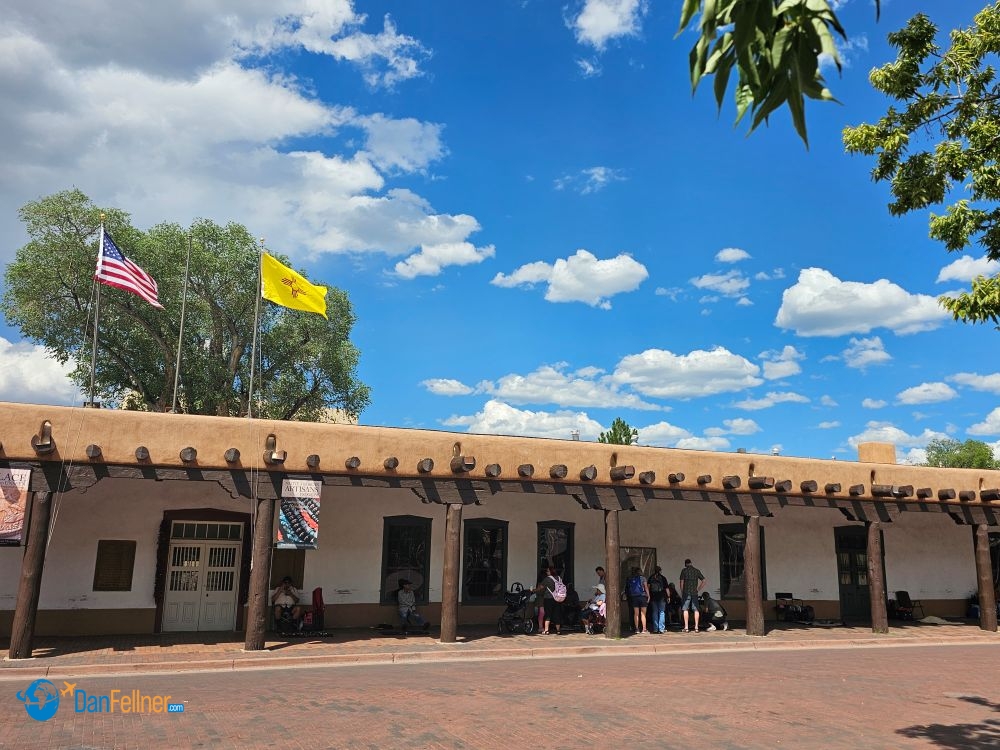
The Palace of the Governors in downtown Santa Fe, built in 1610, is recognized as the oldest continuously standing European-constructed public building in the country.
The current seat of government — the New Mexico State Capitol — is a 10-minute walk away. Known by the locals as the “Roundhouse,” it’s the only circular state capitol in the U.S. It also functions as a free public art museum with nearly 600 works. The capitol’s rotunda features the state seal inside New Mexico’s distinctive Zia sun symbol, which also appears on the state flag.
Interestingly, New Mexico became the 47th state in January of 1912, just one month before Arizona gained statehood.
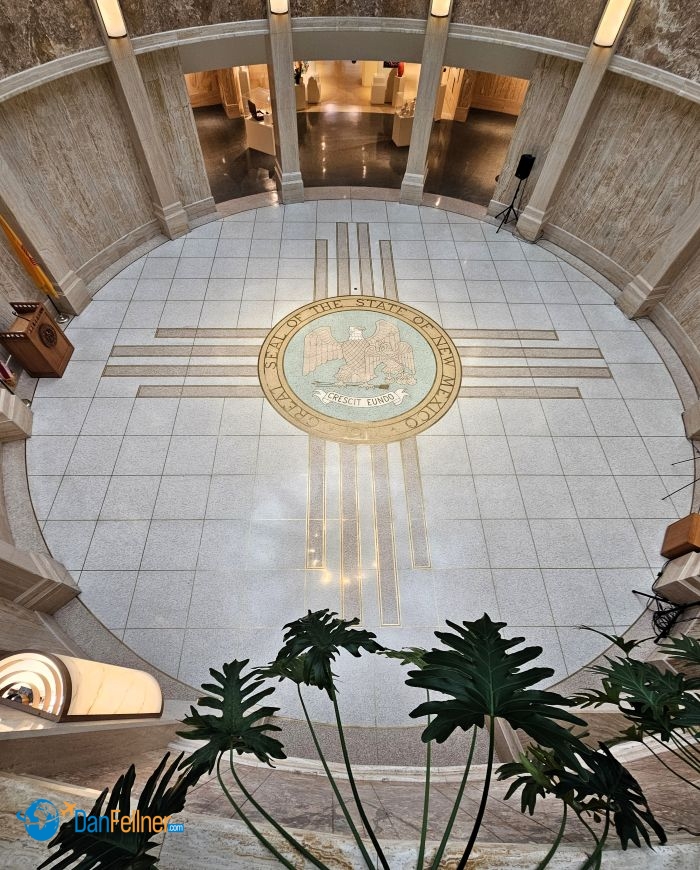
The Santa Fe Capitol’s rotunda features the state seal inside New Mexico’s distinctive Zia sun symbol, which also appears on the state flag.
The San Miguel Chapel, three blocks south of the Plaza, is widely considered the oldest church building in the country. Built in 1610 by Spanish and Indigenous laborers, the church was destroyed in the 1680 Pueblo Revolt that drove Spanish colonizers out of the region for 12 years. San Miguel was rebuilt in its current form in 1710. Catholic mass is still offered at the church on the first Sunday of each month.
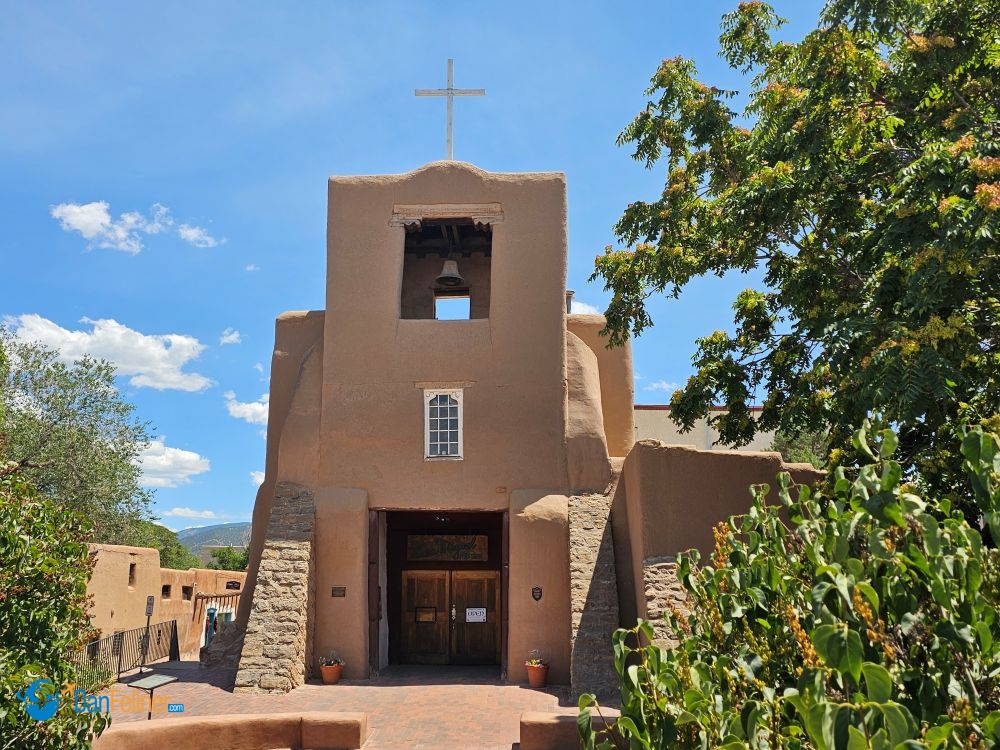
The San Miguel Chapel in Santa Fe is widely considered the oldest church building in the country. Built in 1610, it still holds Catholic services on the first Sunday of every month.
Right across from San Miguel on De Vargas Street sits an adobe structure that bills itself as “the oldest house in the USA.” That claim is debatable as the original date of construction is unknown. While most of the building is from the Spanish colonial period, portions of the foundation are made of puddled adobe, an Indigenous building technique that is believed to date back to around 1200. There’s a small museum and gift shop inside.
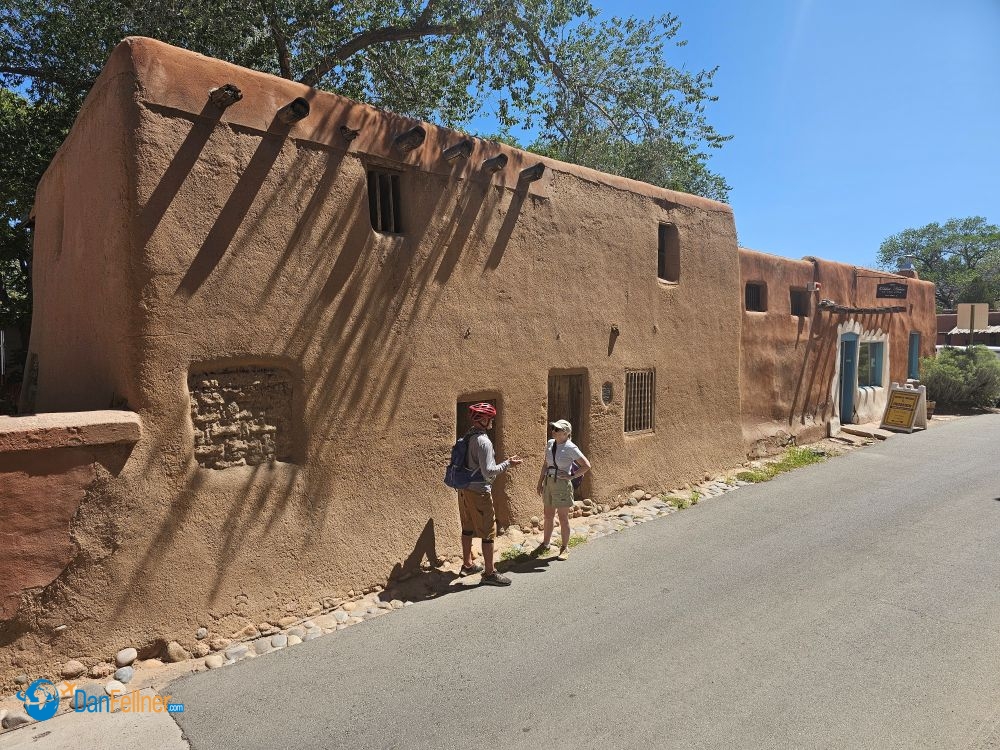
An adobe structure in Santa Fe that bills itself as “the oldest house in the USA.” It’s believed that portions of the building were constructed by Indigenous people around the year 1200.
While not nearly as old as some of the city’s other buildings, the 19th-century Loretto Chapel has become one of Santa Fe’s most popular attractions, largely because of its “miraculous staircase.”
When the church was near completion in 1880, a staircase was needed to access the choir loft. A spiral staircase with 33 steps (a number that matches the earthly age of Jesus) was constructed without center or side supports, defying engineering logic. The sisters of Loretto believed the staircase was built by none other than Saint Joseph, the patron saint of carpenters. No longer a functioning church, the chapel is now operated as a museum and wedding venue. And no, visitors aren’t allowed to climb the staircase.
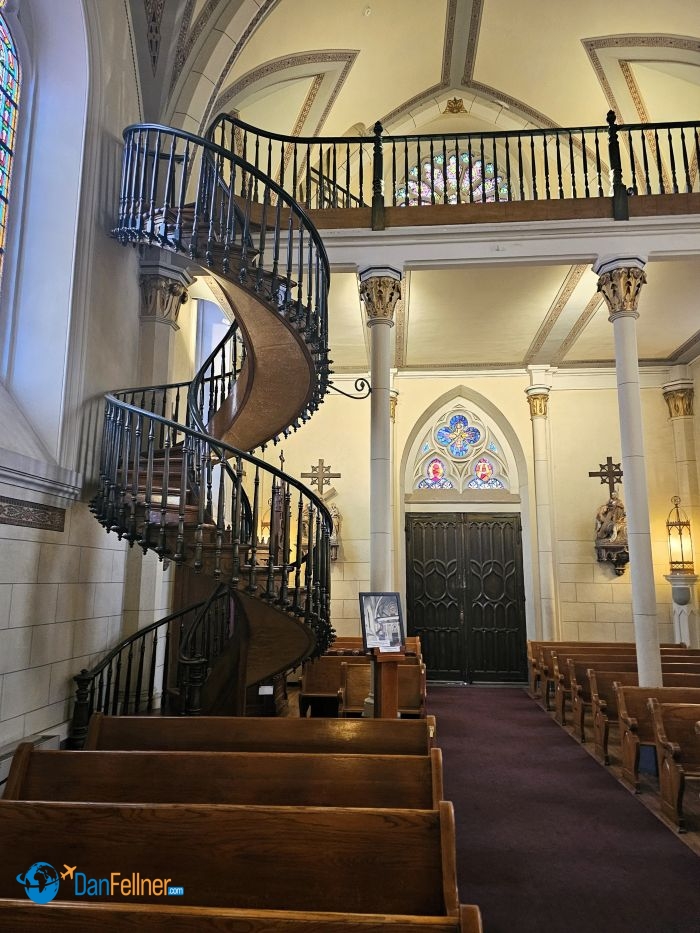
Inside Santa Fe’s 19th-century Loretto Chapel, known for its “miraculous staircase.” The spiral staircase with 33 steps was constructed without center or side support, defying engineering logic.
Santa Fe boasts the third-largest art market in the country, with over 250 art galleries and the nation’s highest per-capita concentration of writers, artists and architects. Not surprisingly, in 2005 it was the first U.S. city designated as a UNESCO Creative City.
More than 100 galleries alone are packed onto historic Canyon Road, a pedestrian-friendly half-mile stretch of road that is about a 10-minute walk east of the plaza.
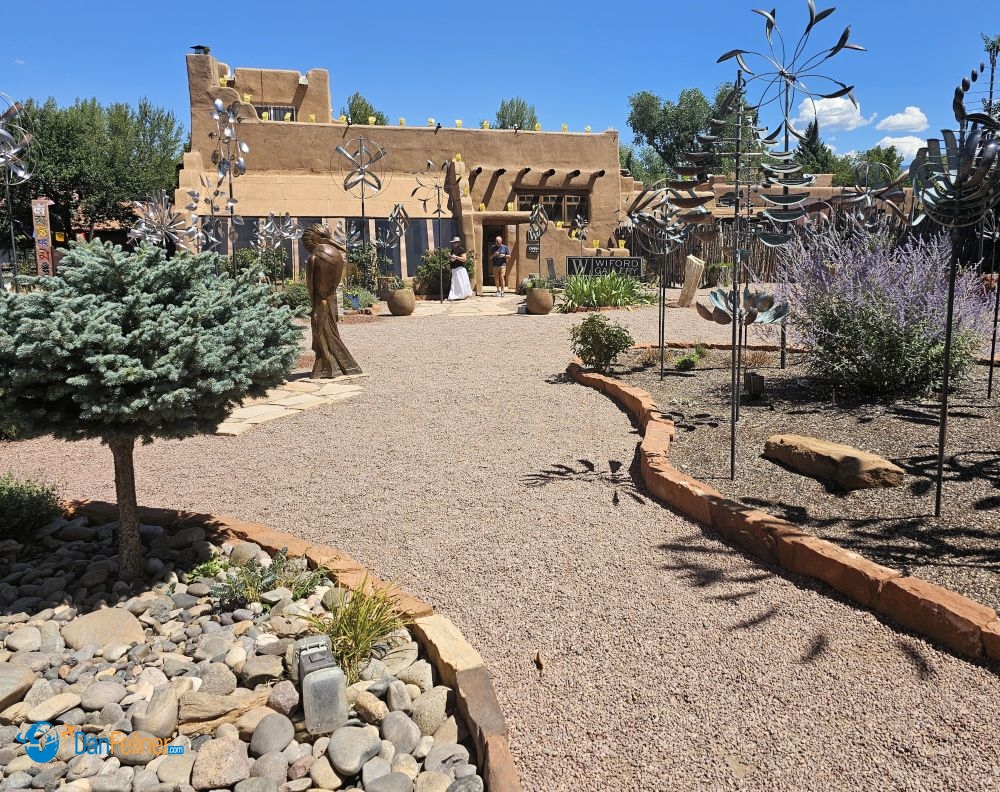
One of more than 100 art galleries found on Santa Fe’s historic Canyon Road. Santa Fe boasts the third-largest art market in the country.
If you’re more interested in looking at art rather than buying it, the Georgia O’Keeffe Museum, about a block from the plaza, features the largest single repository of the acclaimed painter’s work. O’Keeffe, known as the “mother of American modernism,” spent 37 years living in New Mexico; in 1986 she died in Santa Fe at the age of 98.
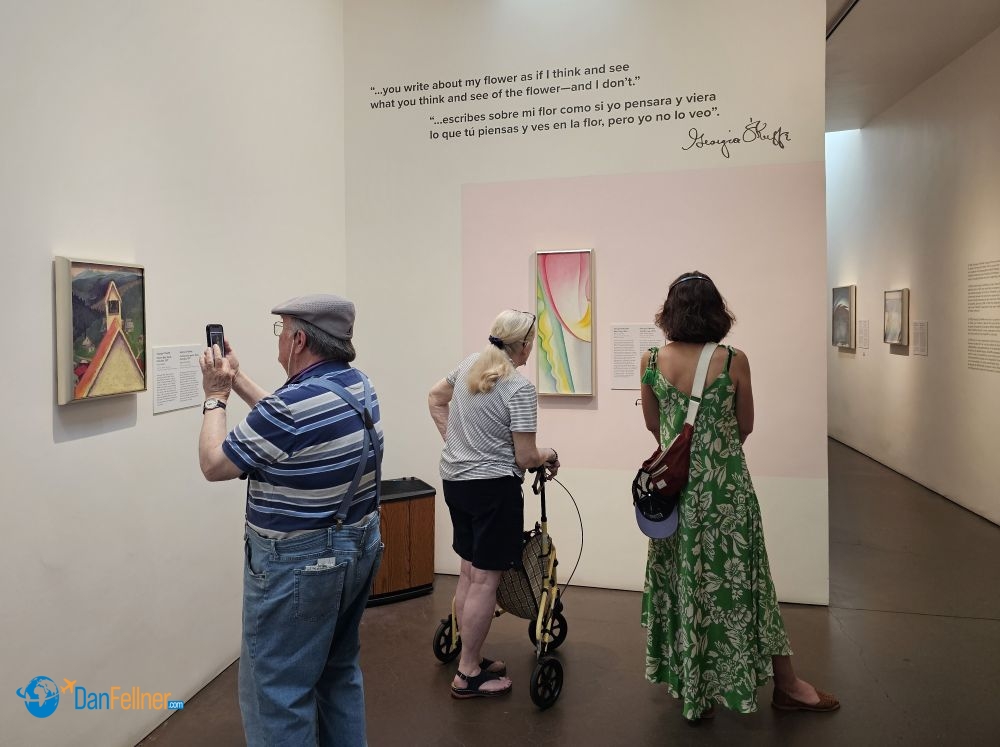
The Georgia O’Keeffe Museum in Santa Fe features the largest single repository of the acclaimed painter’s work. O’Keeffe lived much of her life in New Mexico.
Just a block away from the O’Keeffe Museum, we also visited The New Mexico Museum of Art, famous for its striking Pueblo Revival architecture and its huge collection of Southwestern art. It opened in 1917, making it the oldest art museum in the state.
Museum Hill, about 3 miles southeast of the plaza, features four world-class museums and the Santa Fe Botanical Garden. We especially enjoyed visits to the Museum of International Folk Art — featuring a fascinating exhibit of vividly painted figurative coffins from Ghana — and the Museum of Indian Arts & Culture.
The Santa Fe Opera, about a 15-minute drive north of downtown, offers one of the most spectacular settings in the world to watch an opera. We saw a performance of Puccini’s “Madama Butterfly” in a unique 2,126-seat open-air theater, with stunning views of the sunset and Jemez mountains visible from our seats during the opening act of the production.
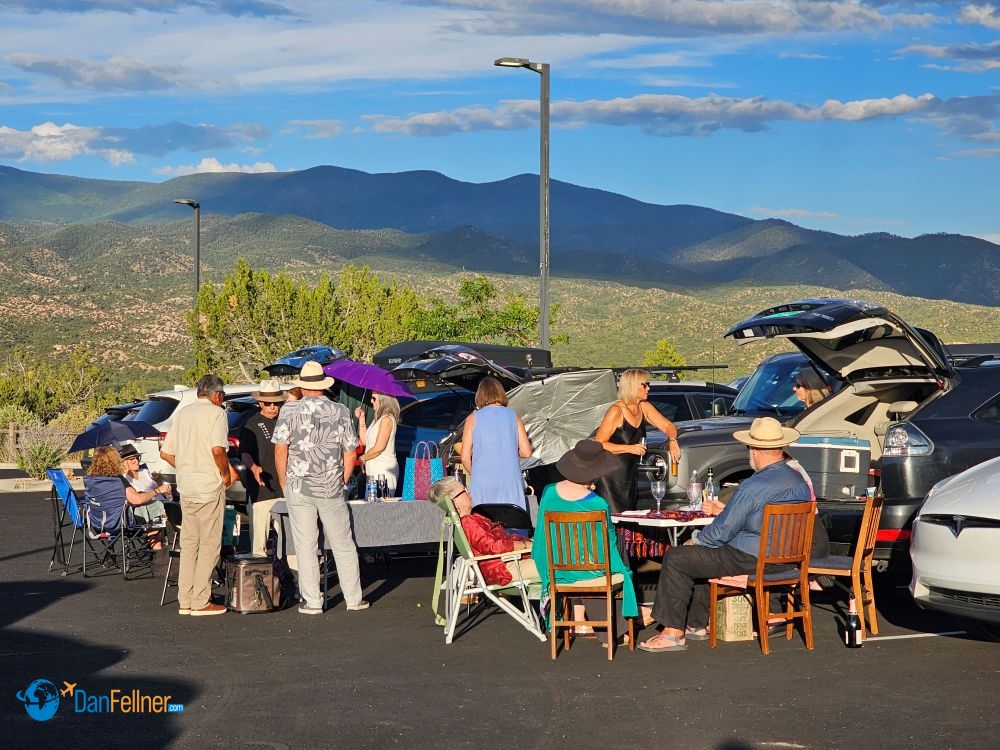
Tailgating in the parking lot at the Santa Fe Opera is an elegant pre-show tradition.
Tailgating at an opera? In Santa Fe, it’s an elegant pre-show tradition. At the theater’s parking lot before the performance, you’ll see tailgaters dining with fine china on white tablecloths. And instead of brats and beer, they’re more likely consuming brie and burgundy. The Santa Fe Opera season is short, running from early July through the end of August.
An entirely different — and unconventional — way to experience a cultural performance is aboard the Sky Railway, a train that takes passengers on two-hour “sunset serenade” trips through the high desert south of the city. During the 36-mile roundtrip ride to the Galisteo Basin, we were treated to a performance featuring a flamenco dancer, singer and guitarist.
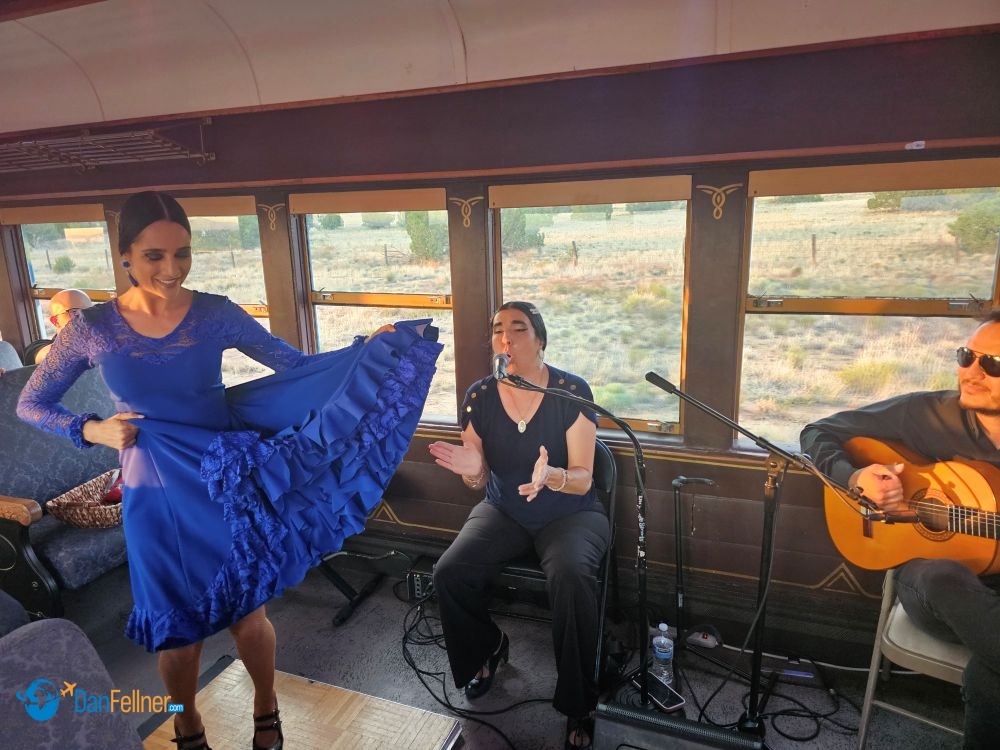
A flamenco performance on a “sunset serenade” train ride through the high desert south of Santa Fe on the Sky Railway.
There are a number of ways to get from Phoenix to Santa Fe. Driving takes about eight hours. Alternatively, there are once-a-day nonstop flights on American Airlines from Phoenix into Santa Fe’s small airport.
We chose to fly into Albuquerque on American, as the flights are more frequent and less expensive; it’s a one-hour drive from the Albuquerque airport to downtown Santa Fe.
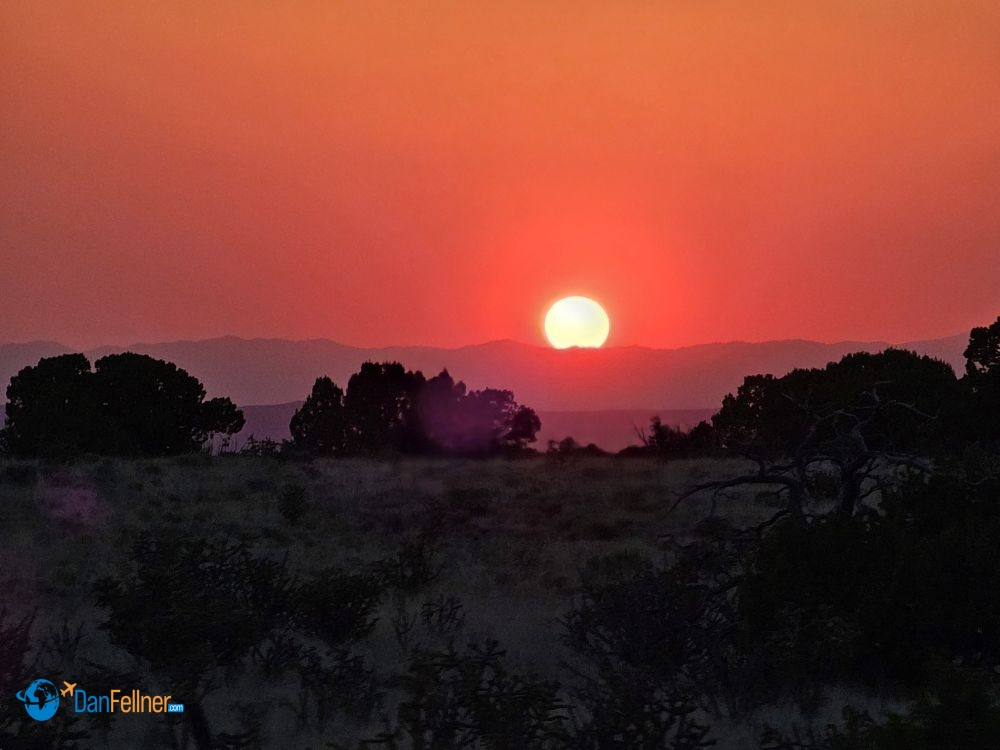
View of the sunset from the Sky Railway south of Santa Fe.
The 27-room boutique hotel The Inn of the Five Graces is just a stone’s throw from San Miguel Chapel and a five-minute walk to the plaza. Built in the early 1600s as a cluster of Spanish adobe homes, the family-owned Five Graces is located in the heart of the Barrio de Analco, the oldest continuously inhabited neighborhood in the U.S.
On site at the Five Graces is the renowned Pink Adobe restaurant, known for its unique blend of New Mexican and Cajun cuisine. The Pink Adobe opened in 1944.
By Santa Fe standards, that makes it a relative baby.
© 2026 Dan Fellner
Website: Tourism Santa Fe