

Visit to Europe’s northernmost point offers stunning scenery, chilly weather
The Arizona Republic/USA Today.com — July 6, 2025
NORDKAPP, Norway – The calendar says it’s the day of the summer solstice. The map tells us we’re in a country known as the “land of the midnight sun.”
Yet the weather at this remote clifftop 300 miles above the Arctic Circle that marks continental Europe’s northernmost point is anything but summerlike. And the midnight sun seems to be taking an afternoon nap with no chance of awakening, blocked by a thick layer of clouds.
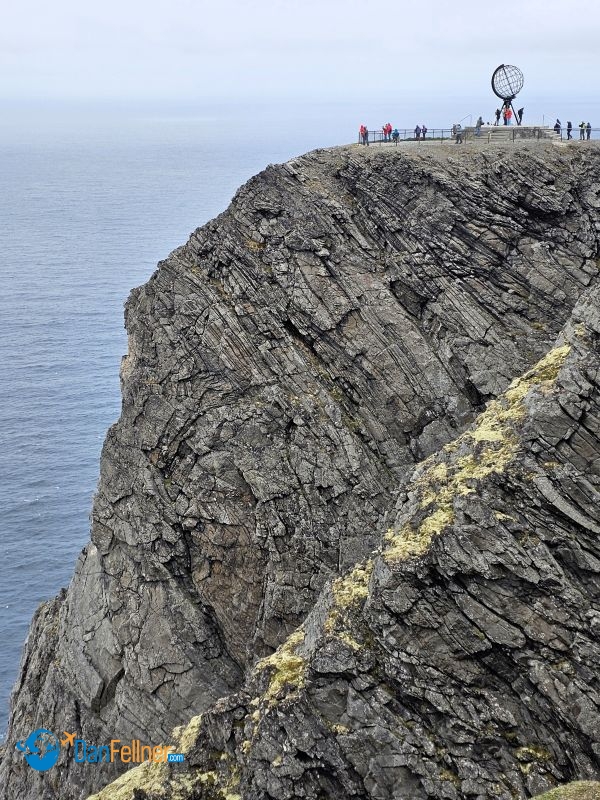
The dramatic cliff at Nordkapp (North Cape), Norway, marks continental Europe’s northernmost point.
Instead, a light drizzle and blistering wind off the Arctic Sea make temperatures in the mid-30s feel far colder.
If this is summer, what must winter be like?
Welcome to Nordkapp (North Cape), a magnificent – albeit somewhat extreme — antidote for travelers looking to escape the summer heat back home while visiting a majestic landmark that has been challenging explorers, royalty and tourists for centuries.
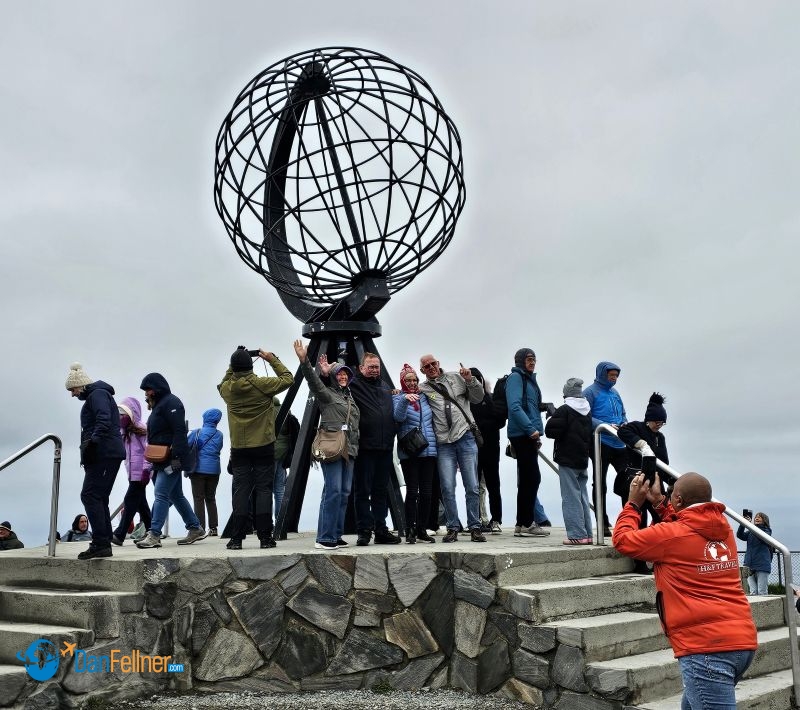
The globe statue at Nordkapp, Norway, which marks the northernmost point of mainland Europe, is a popular tourist attraction.
The visit to Nordkapp was my most anticipated excursion during a two-week cruise in northern Europe on the 2,666-passenger Holland America Nieuw Statendam. The cruise started and ended in Dover, England, a city 80 miles southeast of London known for its iconic white cliffs overlooking the English Channel.
After a stop in Rotterdam, Netherlands to see the famous 18th-century windmills at Kinderdijk – a UNESCO World Heritage Site — we set sail for northern Norway, where the Nieuw Statendam stopped in five ports. Three of our Norwegian stops were above the Arctic Circle, which meant we had around-the-clock daylight for several days.
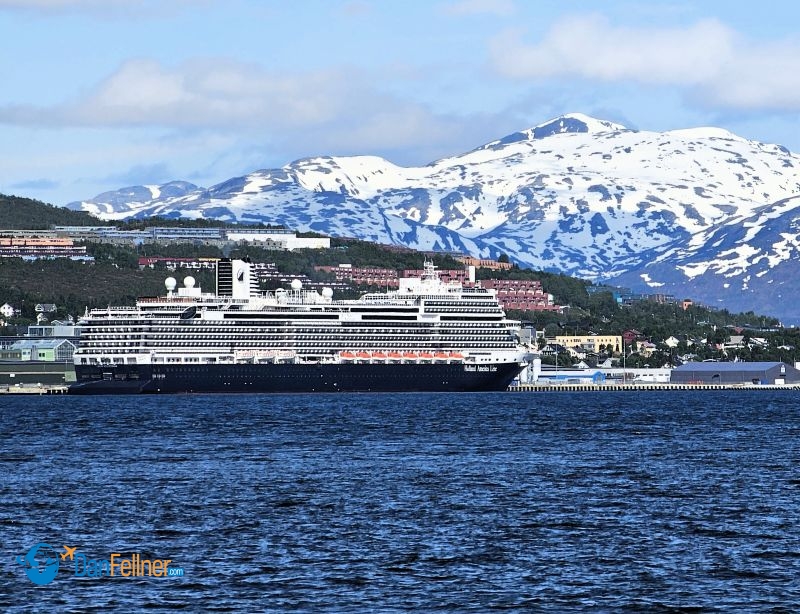
The 2,666-passenger Holland America Nieuw Statendam docked in Tromso, Norway. Tromso was one of three port stops above of the Arctic Circle during a two-week cruise in northern Europe.
We ended the cruise with three port stops in Scotland, including the remote Shetland Islands, before sailing back to England.
Honningsvåg, the northernmost town in mainland Norway and the gateway port to Nordkapp, is dotted with colorful houses that overlook the Barents Sea. Only about 2,200 people live in Honningsvåg, which is about as close to the North Pole (1,314 miles) as it is to Norway’s capital city of Oslo.
During our eight hours docked in Honningsvåg, buses transported more than 1,000 of the ship’s passengers at staggered times on a 45-minute drive to Nordkapp. Each tour group was able to spend two hours at the cape. On the drive, we passed scores of Norwegian reindeer grazing in the Arctic tundra.
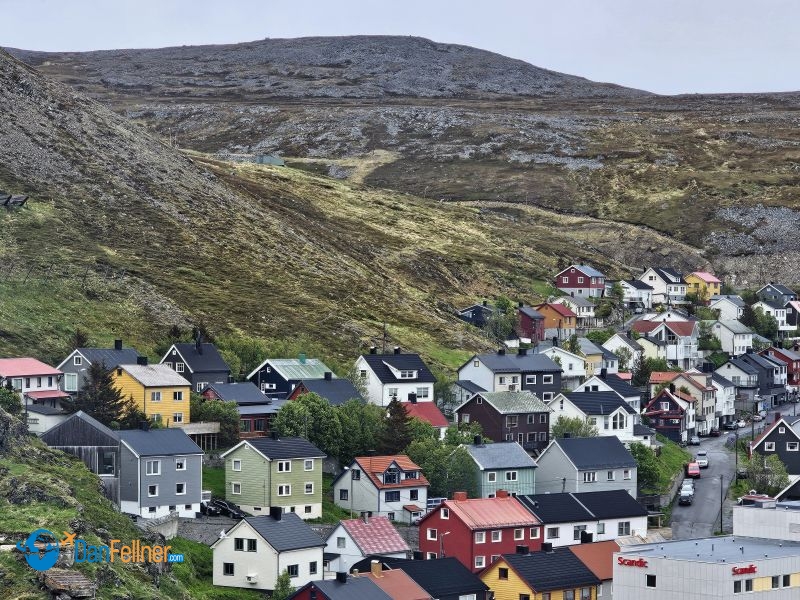
The town of Honningsvag, Norway, is the gateway to Nordkapp. Honningsvag is as close to the North Pole (1,314 miles) as it is to Norway’s capital city of Oslo.
Nordkapp was named by an English sea captain who sailed past the cape in 1553 while searching for the Northwest Passage. The site started to develop as a tourist attraction when Norway’s King Oscar II visited in 1873. There was a battle fought in the waters off the cape during World War II; the British navy sunk a German warship.
A large statue of a globe was erected at the site in 1978, which has become the symbol of Nordkapp and an obligatory photo-op for the 200,000 tourists who visit each summer. The globe is perched on a flat clifftop 1,007 feet above where the frigid waters of the Arctic and Atlantic oceans converge.
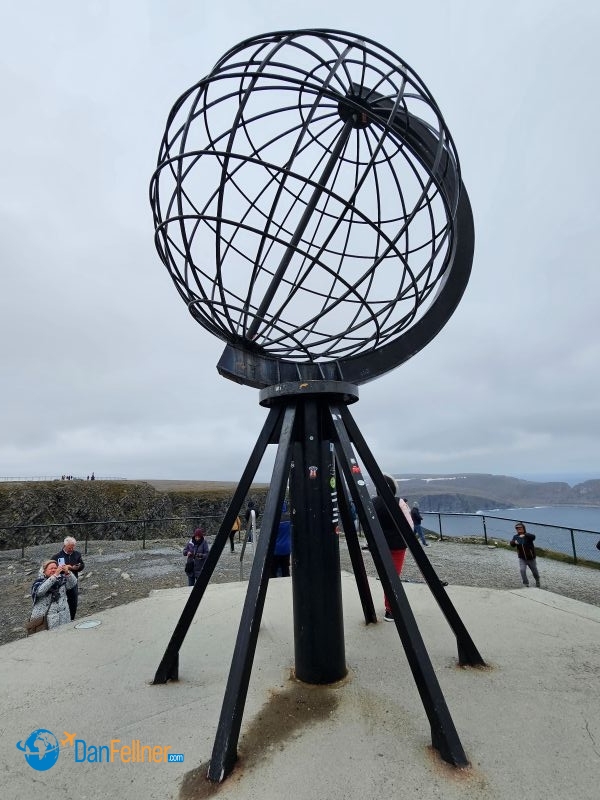
The globe statue at Nordkapp was erected in 1978.
The only patch of land between Nordkapp and the North Pole is the lightly populated archipelago of Svalbard, also under the domain of Norway.
Fortunately, we had been warned about Nordkapp’s chilly weather and came prepared with four layers of clothes, hats and gloves.
We heeded the advice of the Nieuw Statendam’s cruise director, Karlijn Verplanen, who repeatedly reminded us of an old Norwegian saying: “There is no such thing as bad weather. Just bad clothes.”
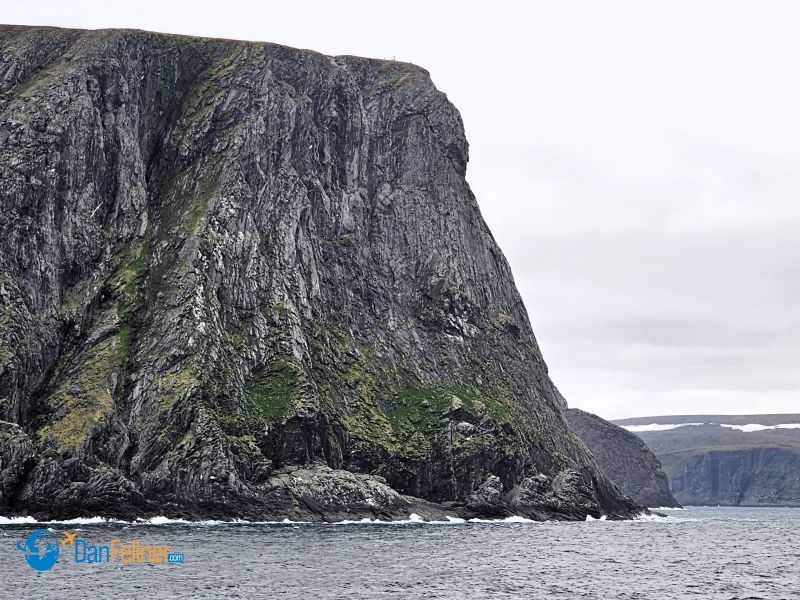
The view of the steep cliff at Nordkapp, which rises 1,007 feet above where the frigid waters of the Arctic and Atlantic oceans converge.
There is a place to scamper inside to escape the biting winds at Nordkapp – a visitor’s center with a coffee shop, theater, small museum and continental Europe’s northernmost post office. A souvenir shops sells shirts, mugs and fridge magnets emblazoned with Nordkapp’s latitude — 71°10’21”.
While Nordkapp markets itself as continental Europe’s northernmost point, technically that distinction belongs to Cape Nordkinn, located on Norway’s mainland. Nordkapp is several miles farther north of Cape Nordkinn but is on an island — Mageroya — connected to the mainland by a road that passes through an undersea tunnel.
Either way, Nordkapp can rightly claim the honor of being Europe’s northernmost point accessible by car.
After departing Honningsvåg that evening, the Nieuw Statendam sailed past Nordkapp for one final look of the cape as we headed 200 miles southwest to our next Arctic port-of-call – Tromso – where the weather was sunny and 20 degrees warmer.
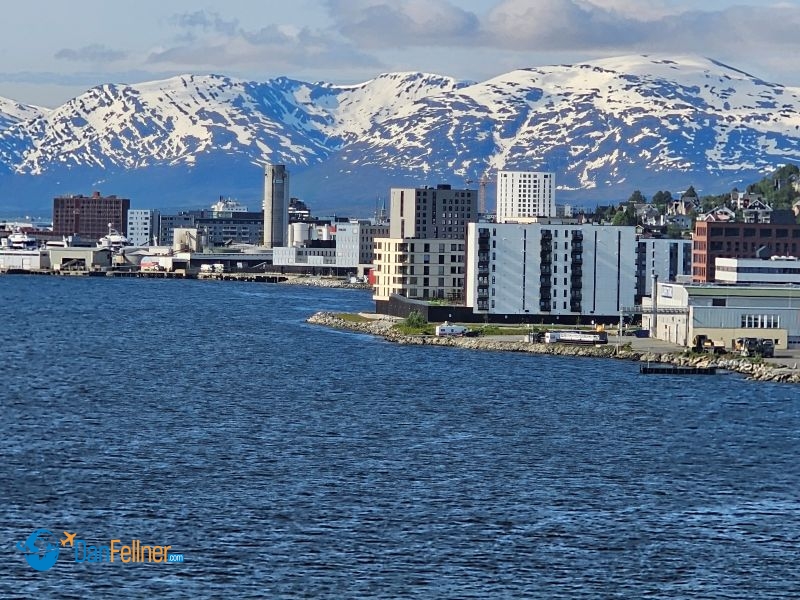
The city of Tromso in northern Norway. Tromso was one of three ports stops north of the Arctic Circle on a two-week cruise of northern Europe on the Holland America Nieuw Statendam.
Tromso, one of Norway’s most scenic cities, has a population of about 80,000. It’s a popular place for winter visitors who come to see the Northern Lights.
We took a stroll down the Storgata, the city’s main pedestrian street, past shops, cafes, the northernmost McDonald’s in the world, and food stands selling reindeer hotdogs.
We spotted some of the locals celebrating a cherished Norwegian tradition called utepils, referring to the act of enjoying the first beer of the season at an outdoor pub under the sun with friends.
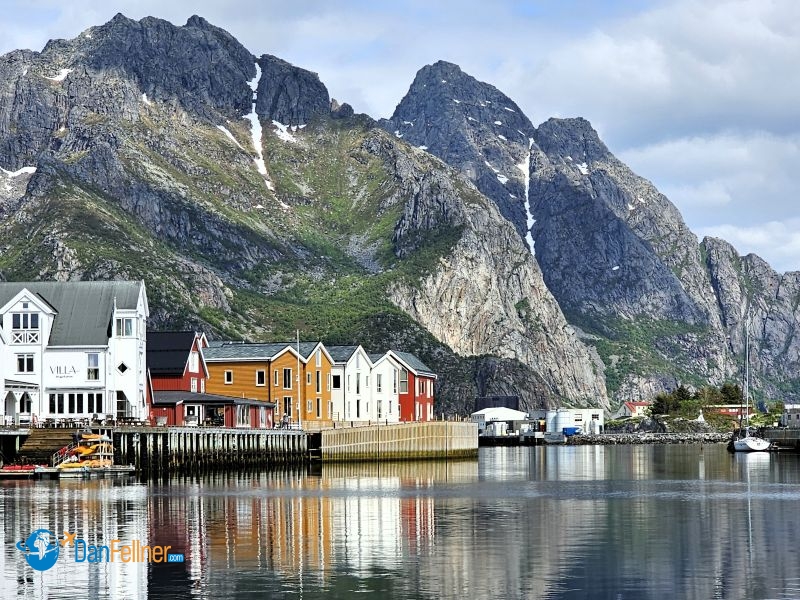
The small fishing village of Henningsvær in the Lofoten Islands, about 30 miles west of mainland Norway.
Our third and final Arctic port stop, the remote Lofoten Islands, are 30 miles west of mainland Norway. Home to about 24,000 people, the archipelago consists of 80 islands, only a few of which are inhabited.
From our tender port near the town of Leknes, we took a one-hour bus ride to the picturesque fishing village of Henningsvaer. Along the way, we crossed several bridges taking us from island to island while we gazed at snow-capped mountain peaks towering over glacial fjords. With only 500 residents, Henningsvaer has an economy built on cod and – more recently — tourism.
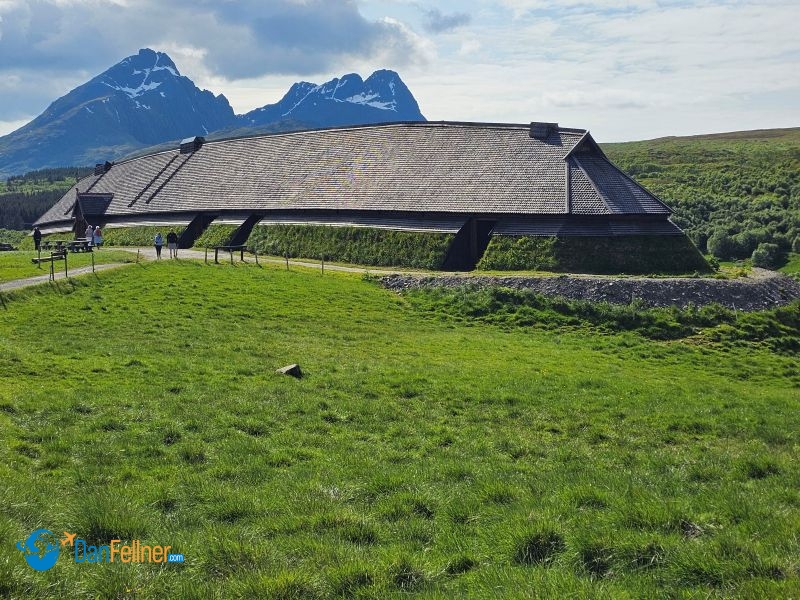
A reconstruction of a 272-foot long Viking longhouse, the largest ever found from the Viking Age, at the Lofotr Viking Museum on the remote Lofoten Islands west of mainland Norway.
The Vikings had a significant presence on the Lofoten Islands about 1,000 years ago. We visited the Lofotr Viking Museum in the small village of Borg and toured a reconstruction of a 272-foot long Viking longhouse, the world’s largest ever found.
Our shore excursion in the Lofotens was one of a growing number of 26 sightseeing tours that Holland America now offers in partnership with the History Channel, created to take a deep dive into a location’s historical significance.
The Nieuw Statendam, which first set sail in 2018, was close to capacity with 2,578 passengers onboard, about 40 percent of whom were Americans. There also was a large contingent of Dutch passengers and all of the ship’s announcements were in both English and Dutch.
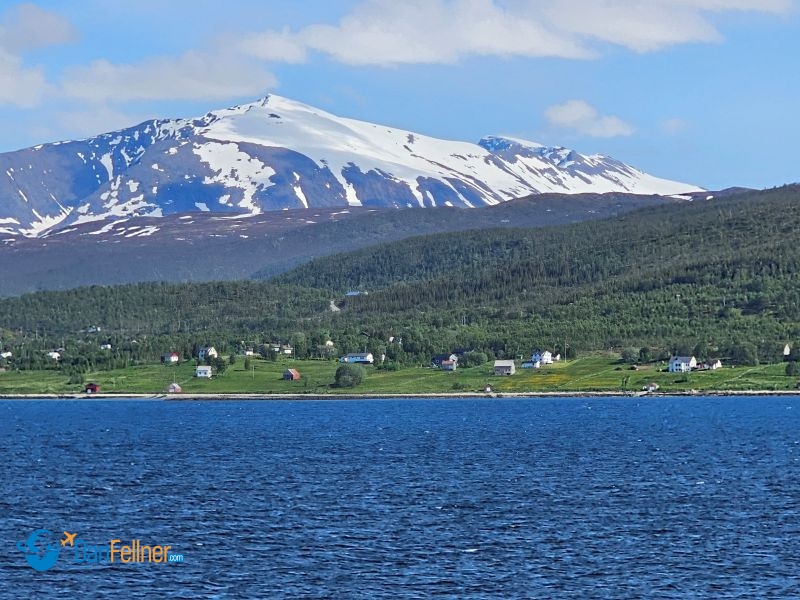
The view from the Holland America Nieuw Statendam of one of the many fjords near Tromso, Norway, north of the Arctic Circle.
As for the day we visited Nordkapp, out of curiosity I checked the weather back in Phoenix. The high was 108. The cape was more than 70 degrees colder, not counting the windchill.
While I watched fellow tourists take selfies by the globe statue on the Arctic clifftop, I thought about the heat in Arizona. A 35-degree day with a stiff wind in late June actually started to feel much more bearable – even quite invigorating.
© 2025 Dan Fellner