


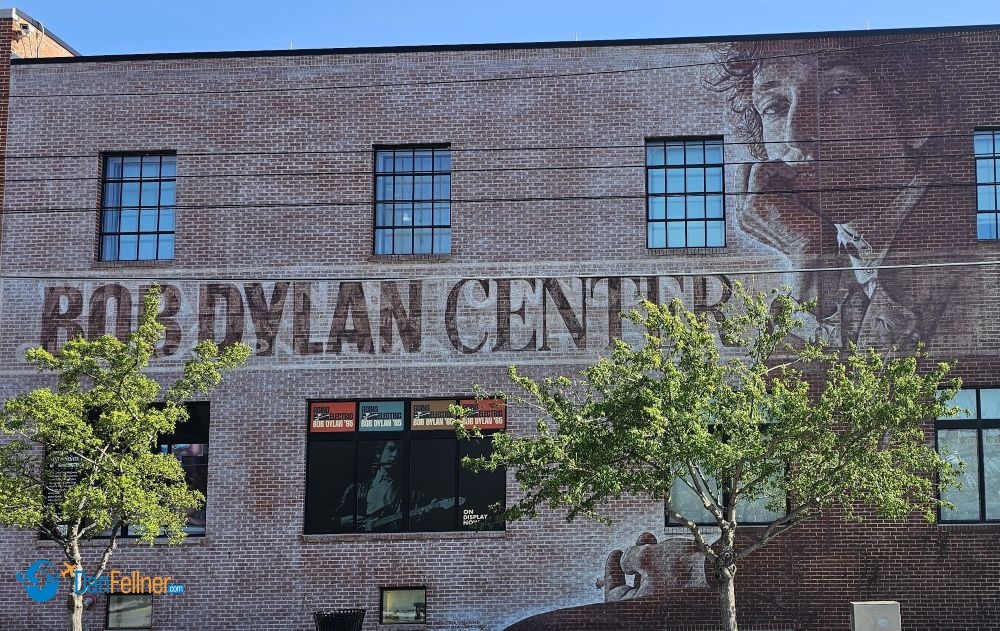
Museums devoted to Dylan, Guthrie and other attractions helping this Bible Belt city carve out a niche as a Middle America music hub
The Arizona Republic — May 3, 2026
TULSA, Okla. — It may not get top-billing with the likes of Nashville, Austin and New Orleans, but this city at the base of the Ozark Mountains in northeast Oklahoma is quietly climbing the charts as a leading travel destination for music lovers.
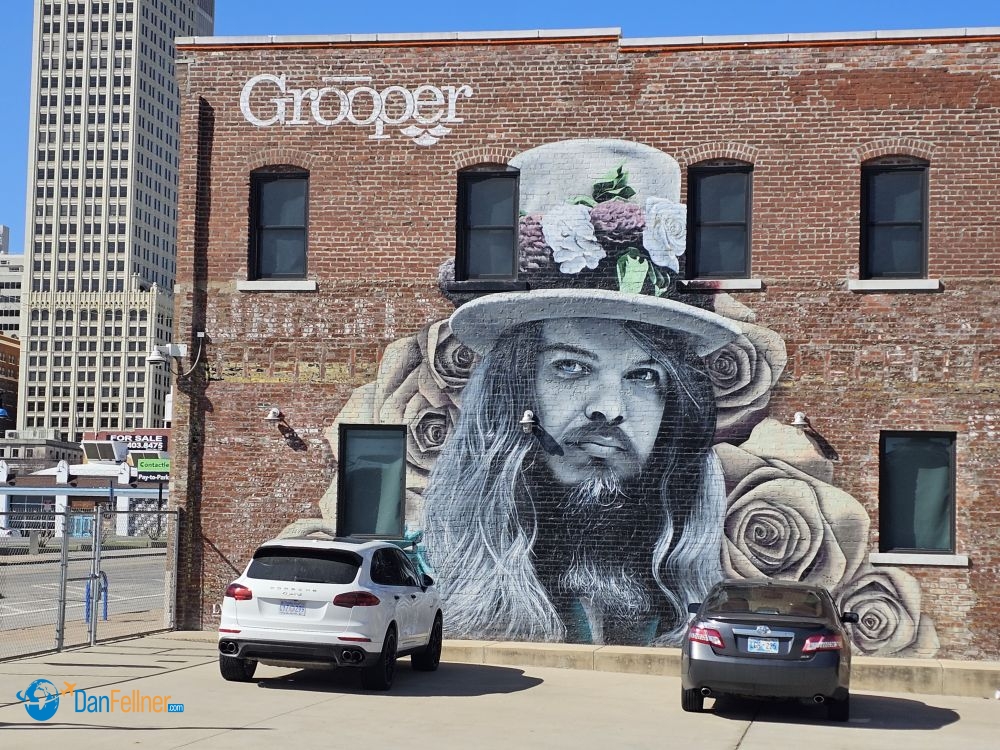
A mural of Rock and Roll Hall-of-Famer Leon Russell in downtown Tulsa. Russell is considered one of the architects of the distinctive “Tulsa Sound.”
Tulsa boasts world-class attractions like museums devoted to the music of Bob Dylan and Woody Guthrie, one of the most renowned recording studios in the country and venues for hundreds of bands that keep alive the distinctive “Tulsa Sound” — a blend of blues, rockabilly, country and rock ‘n’ roll that was born there in the 1950s.
Tulsa’s history is marred by the horrific 1921 Race Massacre during which much of the affluent Greenwood District — known as “Black Wall Street” — was burned down. Decades later, the oil bust of the 1980s decimated the local economy. But thanks in part to Guthrie, Dylan, Leon Russell and so many other music legends, the city is now enjoying a remarkable transformation.
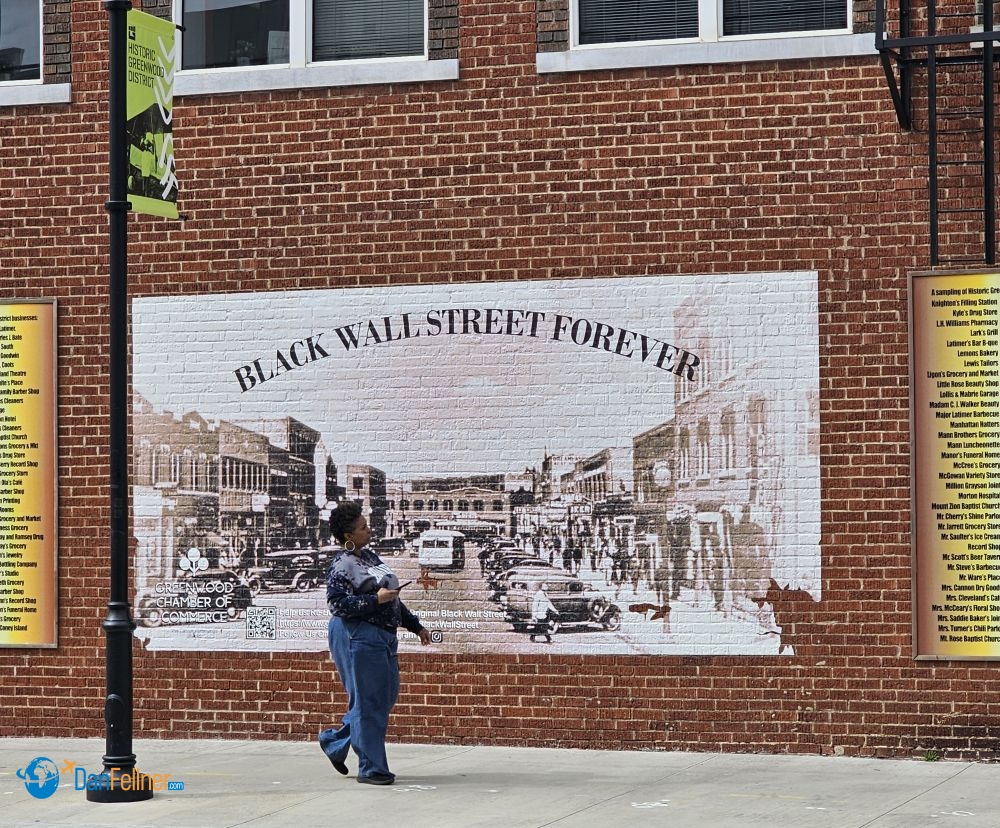
Tulsa’s historic Greenwood District, known as “Black Wall Street,” was the site of the horrific 1921 Tulsa Race Massacre.
“I think Tulsa is really having a moment,” says Steven Jenkins, director of the Dylan Center. “We hear from visitors every day that, ‘Frankly, Tulsa really wasn’t on my radar.’ But they love Woody and they love Bob and come to see their stuff. There’s quite a bit here and it seems to exceed expectations for folks.”
Formerly known as “the oil capital of the world,” Tulsa is now carving out a niche as an arts and cultural hub in Middle America. It’s even earned accolades from Rolling Stone magazine, which praised Tulsa as a place where “history, social consciousness and barroom jamming make it one of the most fun places to visit right now.”
Wait, Tulsa? Yes, this self-proclaimed “Buckle of the Bible Belt” can really dust off its boots and rock.
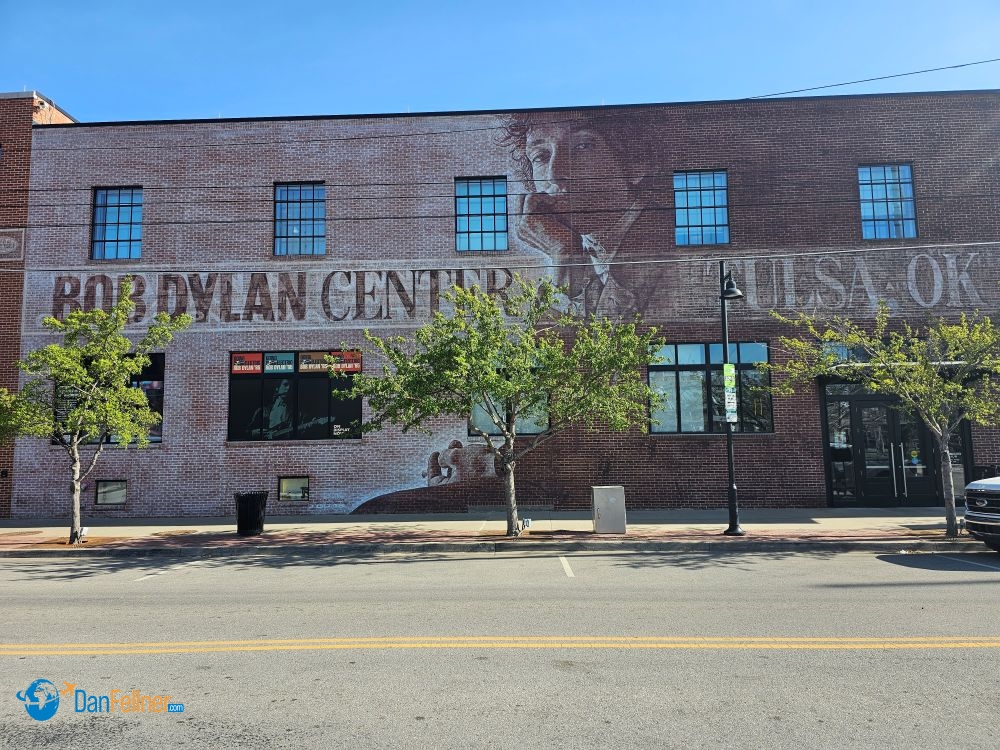
The Bob Dylan Center in Tulsa’s Arts District features one of the largest archives in the world devoted to a single artist.
During a recent visit to this metropolitan area that is home to about 1 million people, I visited several of Tulsa’s leading music attractions and learned firsthand why music-related tourism is generating hundreds of millions of dollars for the local economy.
Indeed, music is helping Tulsa strike the right chord in diversifying its economy and revitalizing a downtown that — until the past few years — offered little to attract visitors.
Here’s a closer look at four must-see music-related attractions in Tulsa.
The Woody Guthrie Center
Located in a red-brick building in the city’s Arts District, the Woody Guthrie Center highlights the life and extensive body of work of the Oklahoma-born folk musician.
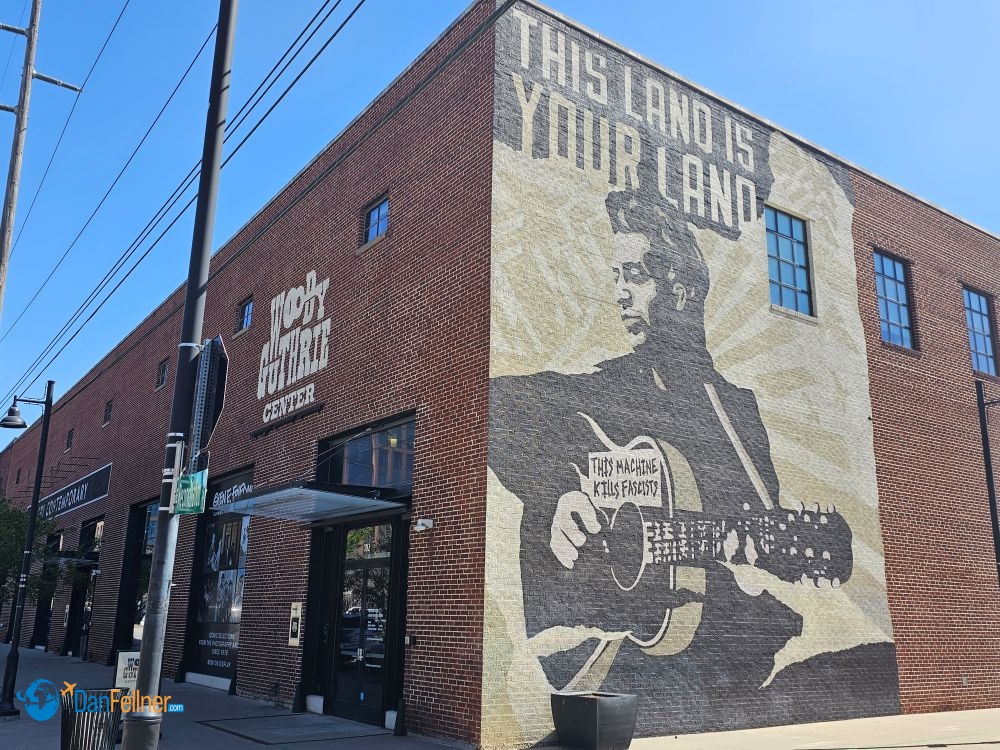
The Woody Guthrie Center in Tulsa’s Arts District highlights the life and extensive body of work of the Oklahoma-born folk musician.
The museum opened in 2013 when Guthrie’s archives were acquired by the Tulsa-based George Kaiser Family Foundation. Kaiser, a Tulsa banking and oil billionaire, has left a huge footprint in the city through philanthropic investments in not only the arts, but initiatives aimed at reducing generational poverty and improving early childhood education.
The centerpiece of the Guthrie Center is an exhibit devoted to Guthrie’s most enduring song — “This Land is Your Land” — a folk anthem he wrote in 1940 as a populist response to “God Bless America.” The exhibit features Guthrie’s handwritten lyrics to the song.
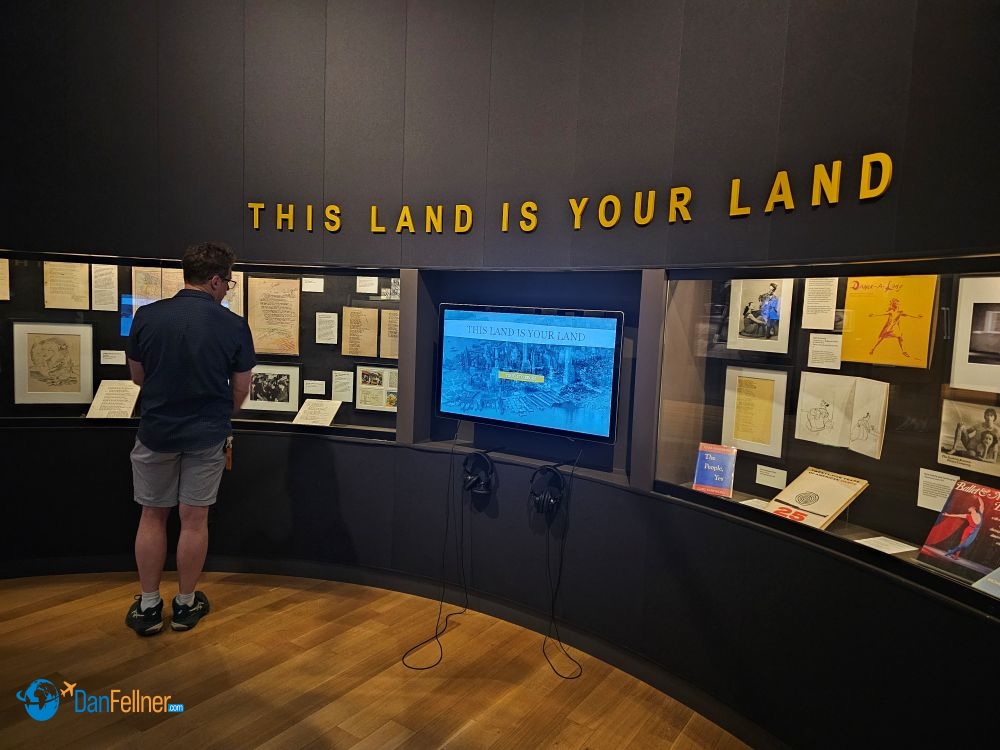
The centerpiece of the Woody Guthrie Center in Tulsa is an exhibit devoted to Guthrie’s most enduring song – “This Land is Your Land” – a folk anthem he wrote in 1940.
“Woody Guthrie is timeless,” said Cady Shaw, the museum’s director. “He was very impacted by the stories of everyday people and wrote about it, drew about it, talked about it and sang about it. He lifted up topics that weren’t getting enough attention.”
The Bob Dylan Center
Why did the iconic singer-songwriter Bob Dylan agree to have his extensive collection of artifacts publicly displayed in Tulsa, a city to which he seemingly had little connection? The answer — as depicted in the 2024 movie “A Complete Unknown” — relates to Dylan’s deep admiration for Guthrie, whom he considered his musical mentor.
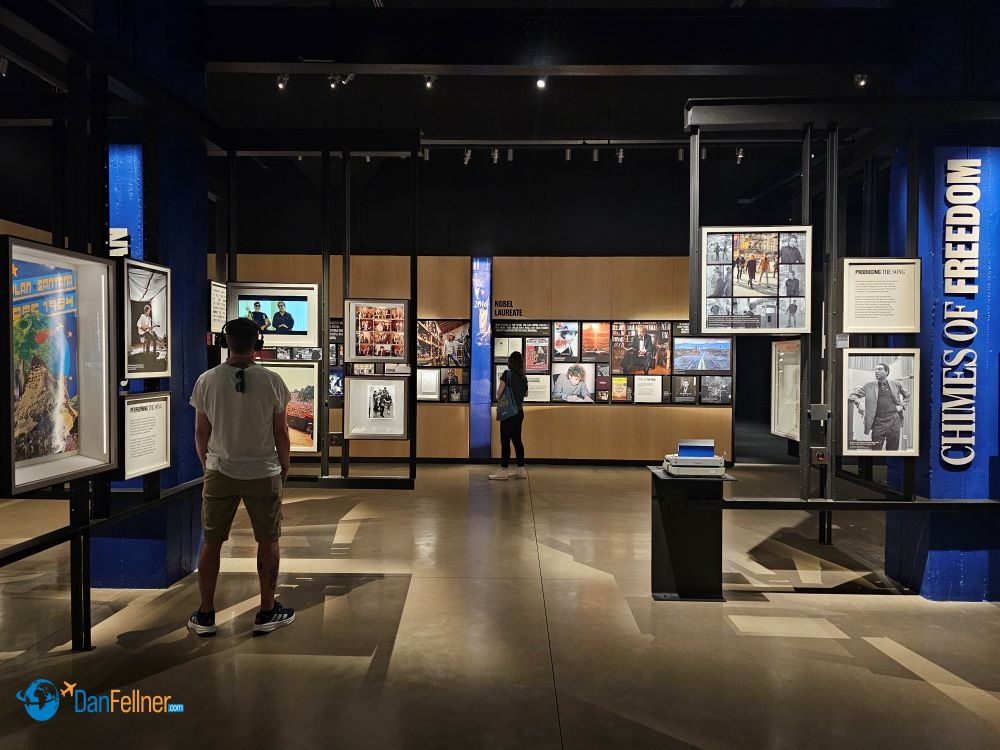
Some of the 100,000 artifacts on display at the Bob Dylan Center in Tulsa.
In 2016 Dylan visited the Guthrie Center and was so impressed with the way his idol’s items were showcased, he agreed to sell his own collection to the Kaiser Foundation.
Today, some 100,000 artifacts related to Dylan’s life — photos, recordings, films, manuscripts and Dylan’s own paintings — are on display in a two-story museum right next to the Guthrie Center. It’s one of the largest archives anywhere devoted to a single artist.
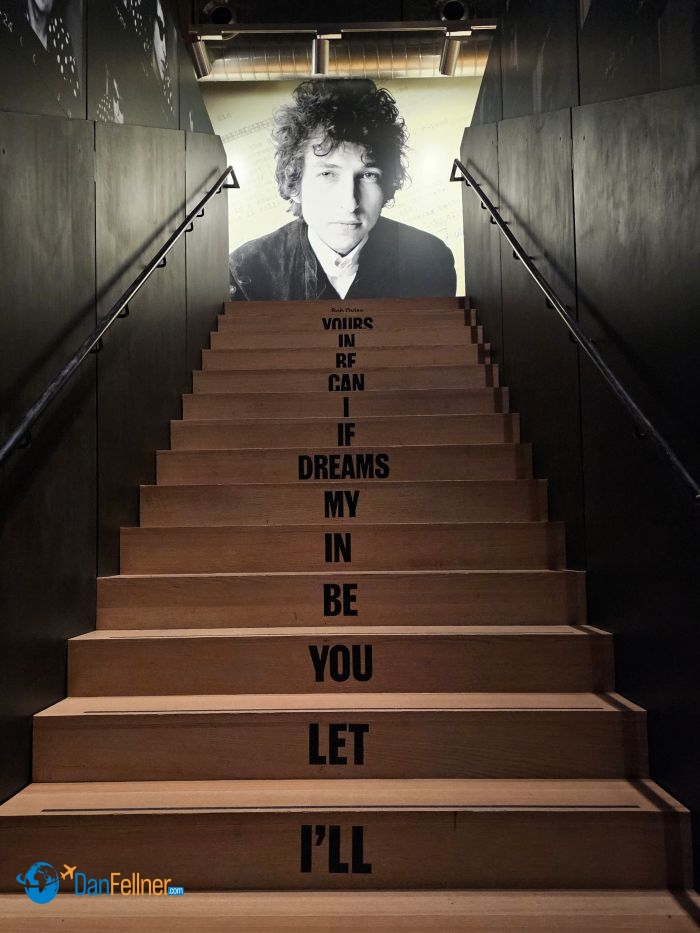
A staircase at the Bob Dylan Center in Tulsa displays the lyrics from one of the musician’s songs — “Talkin’ World War III Blues.”
“He had the world to choose from,” said Jenkins, the director of the Dylan Center. “This could have been in New York or in L.A., or any world capital, but the Guthrie connection was so strong for him. It’s just to our good fortune that he decided that Tulsa made sense.”
I especially enjoyed seeing the leather jacket Dylan wore when he famously “went electric” at the 1965 Newport Folk Festival and the tambourine that inspired him to write one of his most memorable songs — “Mr. Tambourine Man.”
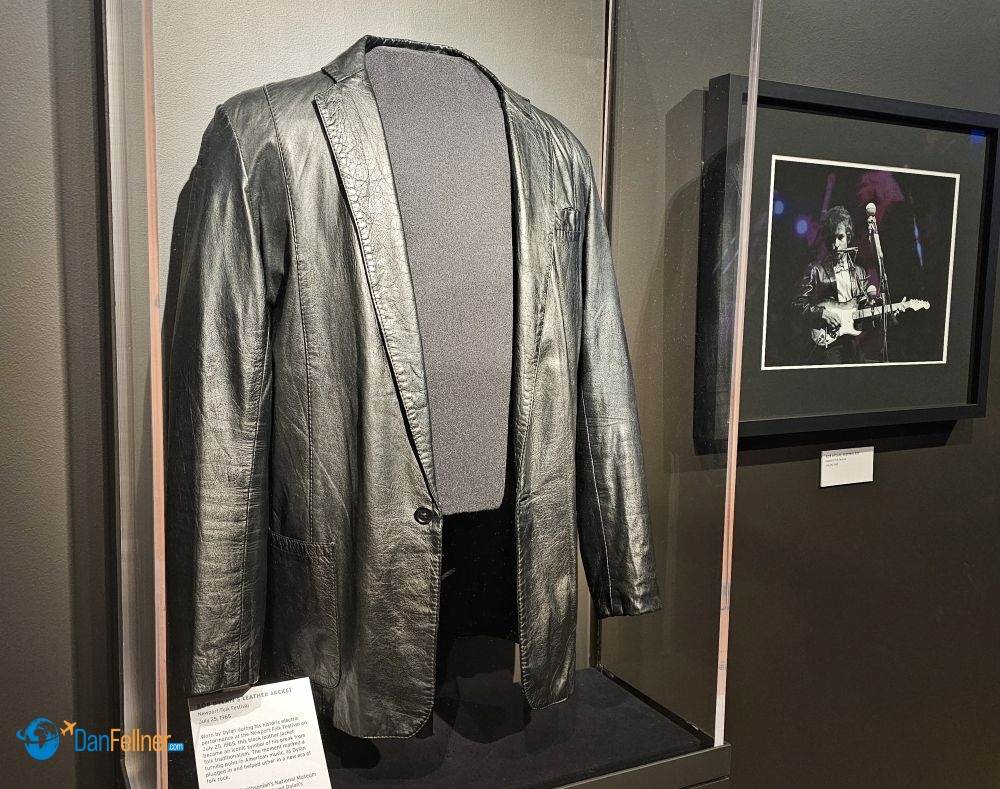
The leather jacket worn by Bob Dylan when he famously “went electric” at the 1965 Newport Folk Festival. The jacket is on display at the Bob Dylan Center in Tulsa.
Jenkins said attendance at the Dylan Center “spiked” when “A Complete Unknown” was released. It now attracts about 75,000 visitors a year. Interestingly, Dylan — never one interested in accolades and self-promotion — has yet to set foot in the museum.
The Church Studio
Two miles east of the Guthrie and Dylan centers, the Church Studio is one of the most celebrated recording studios in the country. Originally erected as an Episcopal Church in 1915, the church was bought in 1972 by Oklahoma-born, Rock and Roll Hall of Famer Leon Russell, who converted it into a recording studio and home offices of Shelter Records.
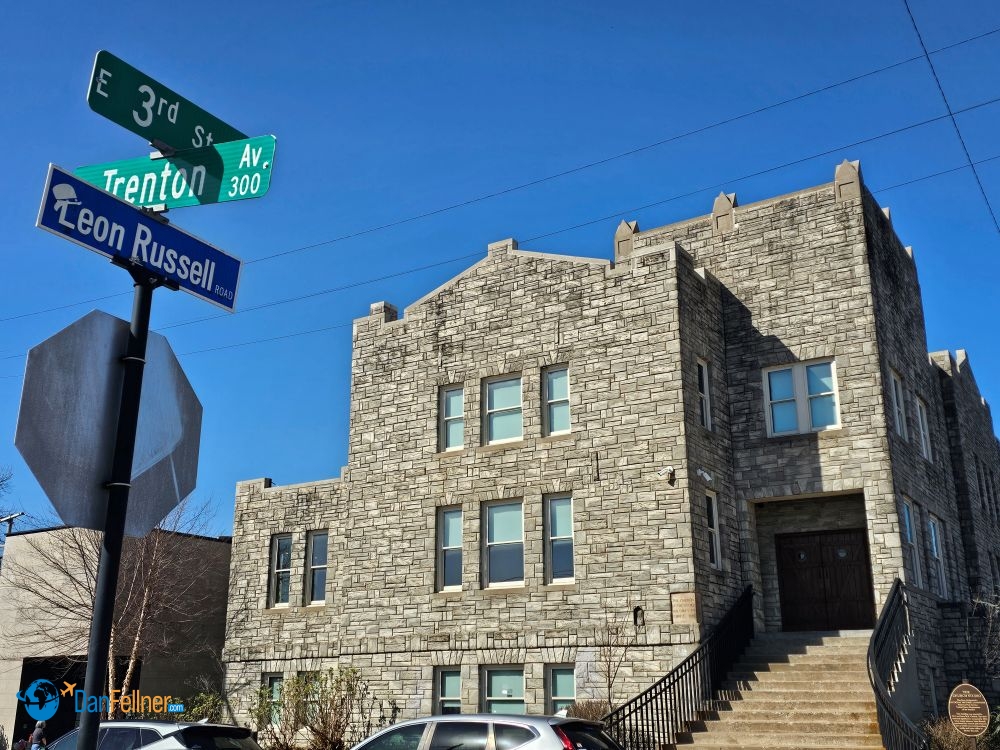
The historic Church Studio on Leon Russell Road was built as a church then converted into a recording studio by Russell, considered one of the architects of the distinctive “Tulsa Sound.”
Over the years, performers like Dylan, Willie Nelson, Tom Petty, Stevie Wonder and Eric Clapton have recorded at the Church Studio. The building, designated a National Historic Landmark, is still used as a recording studio and a venue for lunchtime concerts.
“Like the original church, it’s a people’s place,” said Teresa Knox, owner and CEO. “We’re able to have serious recording going on while the public enjoys our programming, the museum and the artifacts. It just captures a little bit of the magical music history that Tulsa had in the 1970s with Leon Russell.”
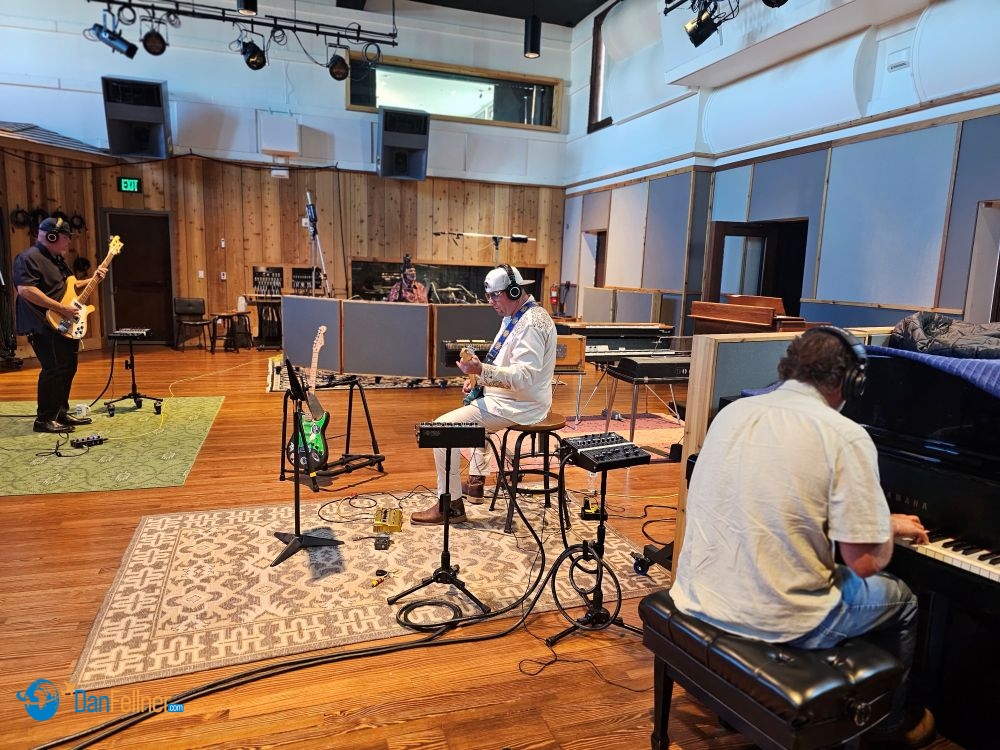
A blues-rock band called Roy & the Oklahoma Chill records a track at the historic Church Studio in Tulsa.
Cain’s Ballroom
Tulsa is known for its vibrant live-music scene. Perhaps no venue is more storied than Cain’s Ballroom, which first opened in 1924 and was listed in the National Register of Historical Places in 2003.
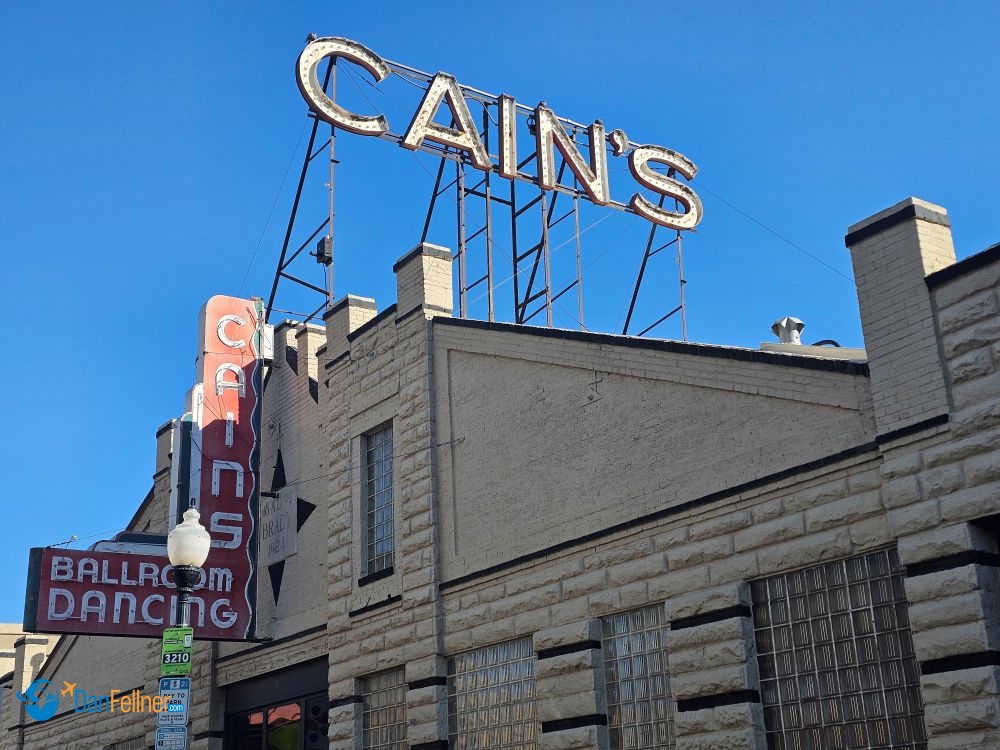
Cain’s Ballroom, one of Tulsa’s most famous live-music venues, first opened in 1924.
Referred to as “the Carnegie Hall of Western Swing,” the venue has hosted such diverse performers as Hank Williams, Snoop Dog, U2 and the Sex Pistols. I got a kick out of seeing a section of drywall that a drug-fueled Sid Vicious punched a hole through after a concert in 1978. It’s been preserved and is on display in the green room.
If you want a quiet place to sit and listen to music, Cain’s probably isn’t for you. It’s primarily a standing-room-only venue with a flat, open floor. Capacity is about 1,500.
A mural outside Cain’s — installed in 2024 to celebrate the building’s centennial — depicts some of the many notable artists who have played at the venue over the past century. Yes, Dylan performed there in 2014.
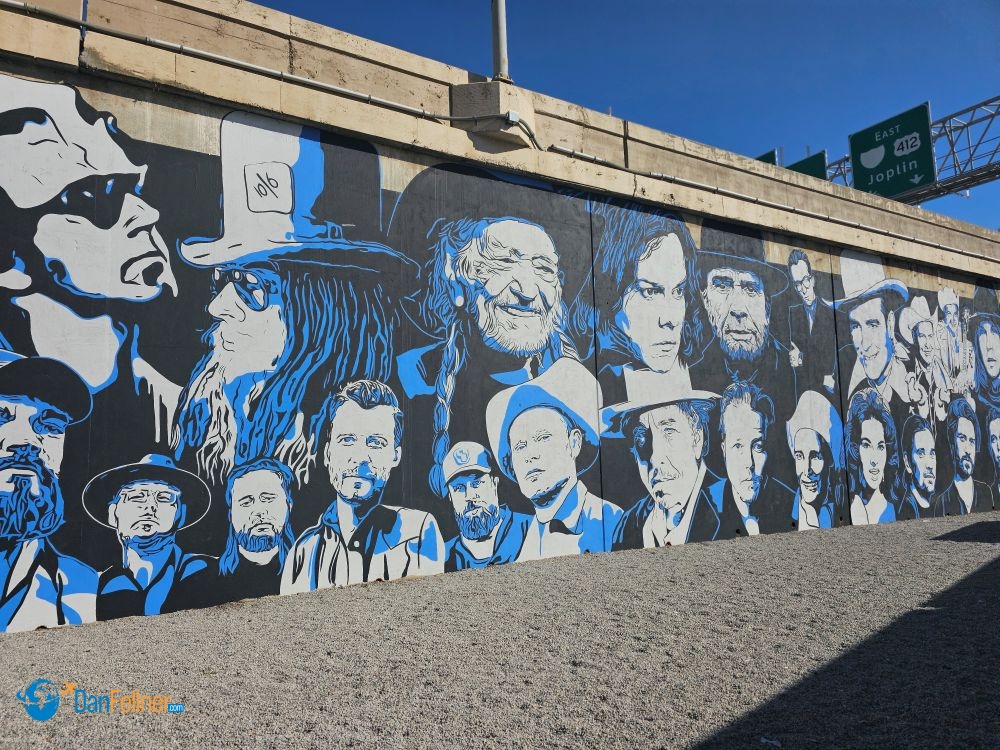
A mural outside Cain’s Ballroom – installed in 2024 to celebrate the building’s centennial – depicts some of the many notable artists who have played at the venue over the past century.
There are daily two-and-a-half-hour, nonstop flights from Phoenix to Tulsa on both American and Southwest airlines. Tulsa International Airport is just a 15-minute drive from the music attractions.
The Tulsa Club Hotel, located in the heart of the city’s Art Deco District, is within walking distance of most attractions and features live jazz music on the third Thursday of each month.
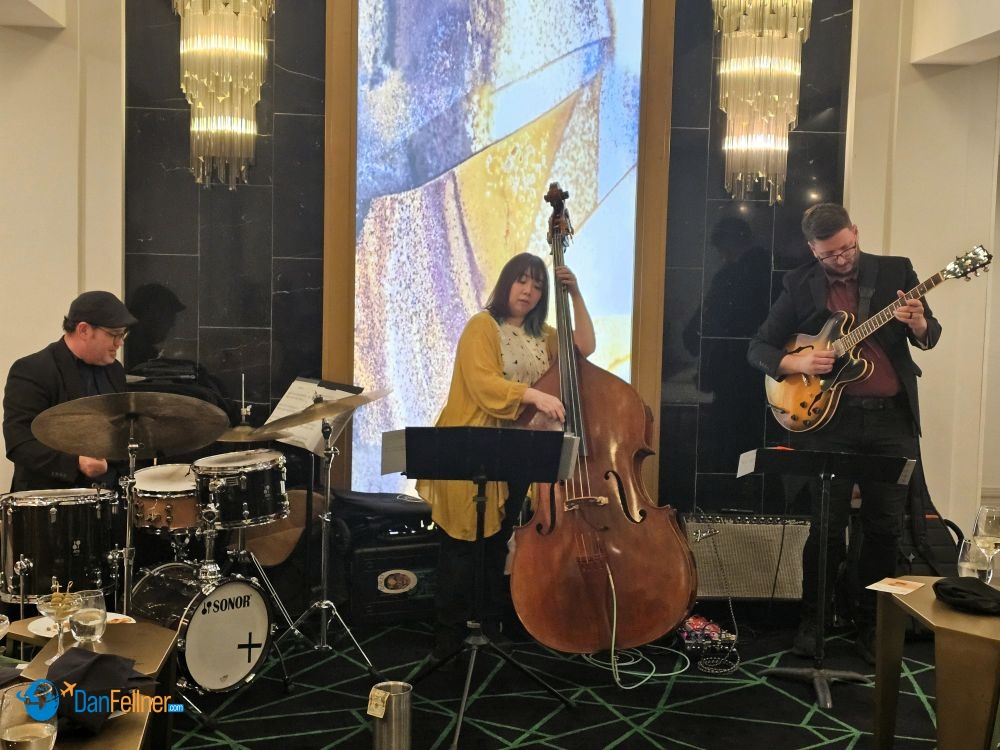
A jazz trio performs at the Tulsa Club Hotel, one of numerous live-music venues in the city.
© 2026 Dan Fellner
Websites: